Walk into a traditional pizza shop in Rome and you may see something very different from the round pizzas most people expect.
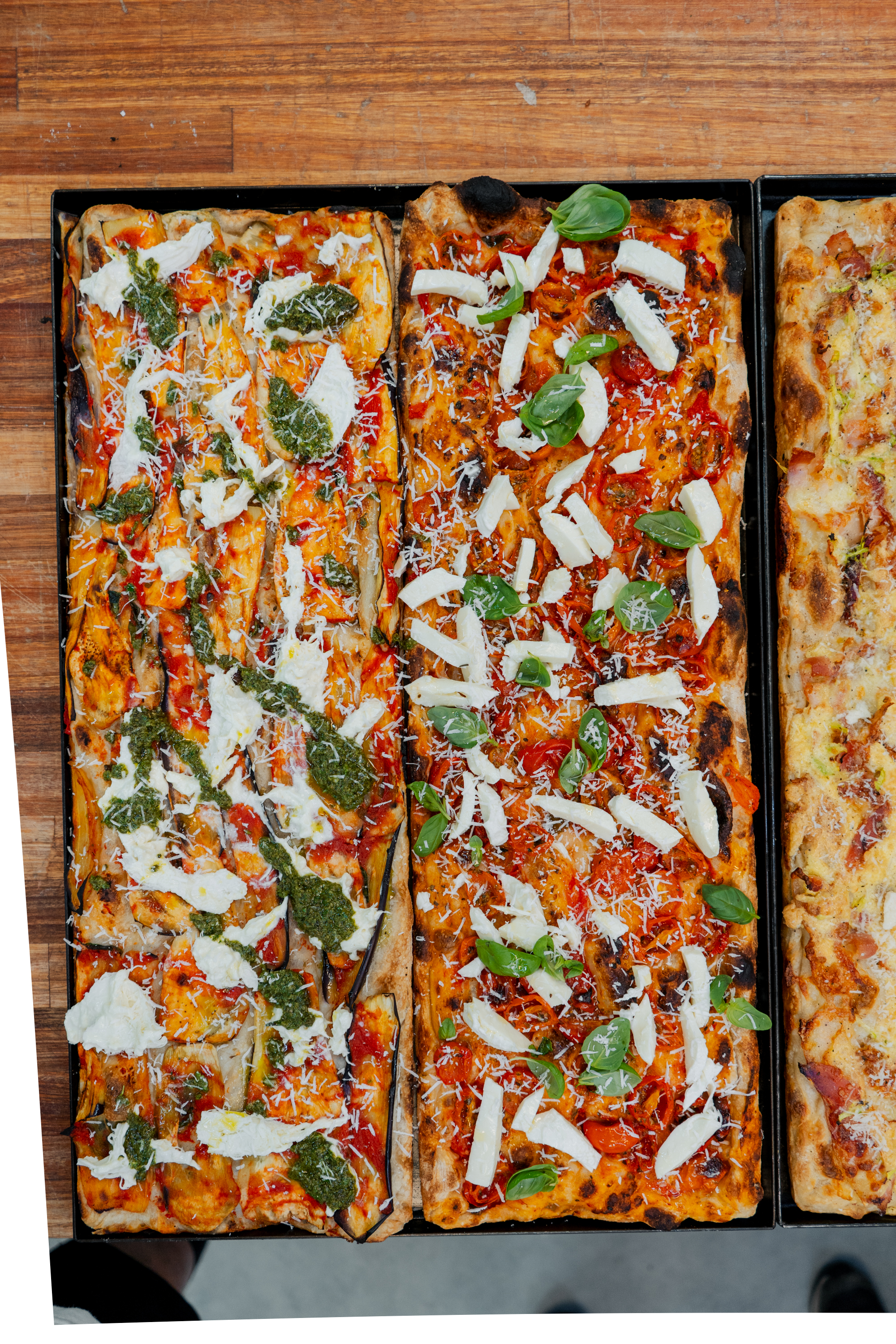
Large rectangular pizzas.
A wide variety of toppings.
Slices cut to order.
And a customer choosing exactly how much pizza they want.
This is Pizza al Taglio — one of the most recognizable expressions of Roman pizza.
But Pizza al Taglio is much more than simply pizza sold by the slice.
Its dough, texture, presentation and production philosophy make it a completely different experience.
For anyone interested in Roman pizza, understanding Pizza al Taglio is essential.

What Is Pizza al Taglio?
The name Pizza al Taglio literally means “pizza by the cut” or “pizza by the slice.”
Instead of ordering an entire round pizza, the customer chooses the portion they want from a larger rectangular pizza.
The pizza is then cut to order and traditionally sold according to weight.
This creates a completely different service model from a traditional pizzeria.
Customers can try different toppings, order smaller or larger portions and combine several varieties in one meal.
But the way Pizza al Taglio is sold is only one part of what makes it unique.
The real identity of this style begins with the dough.
What Makes Pizza al Taglio Different?
Pizza al Taglio is generally recognized for a texture that combines:
- A crisp exterior
- A light and airy interior
- An open structure
- A dough capable of supporting a wide variety of toppings
- A rectangular presentation
The contrast between crispness and lightness is one of its defining characteristics.
A great Pizza al Taglio should not feel heavy.
It should have structure without becoming dense.
It should provide enough strength to support the toppings while maintaining a light internal texture.
Achieving that balance is one of the reasons Pizza al Taglio requires a different approach from many other pizza styles.


Pizza al Taglio Is Not Just “Square Pizza”
One common misconception is that Pizza al Taglio is simply pizza made in a rectangular tray.
But the shape alone does not define the style.
A rectangular pizza can still have a completely different dough, texture and production process.
Pizza al Taglio is defined by a combination of elements:
- The style of dough
- Its internal structure
- Its crispness
- The way it is baked
- The way it is topped
- Its rectangular format
- The way it is cut and served
The final result is designed to work as a complete product.
That is particularly important from a professional point of view.
Pizza al Taglio is not only a recipe.
It is also a business format.
A Different Way of Eating Pizza
One of the reasons Pizza al Taglio is so popular is its flexibility.
Instead of committing to one entire pizza, customers can choose from several different varieties.
One slice may have vegetables.
Another may include cheese.
Another may feature a more elaborate combination of ingredients.
This makes the counter visually important.
The product is displayed before the customer makes a decision.
In other words, Pizza al Taglio is partly sold through visual appeal.
A well-designed Pizza al Taglio counter can immediately communicate variety, quality and abundance.
For a pizza business, this creates an interesting opportunity.
The product itself becomes part of the marketing.


Why Pizza al Taglio Works So Well as a Business
Pizza al Taglio has become popular not only because of its flavor and texture, but also because of its flexibility as a business model.
A Pizza al Taglio concept can serve customers looking for:
- A quick lunch
- A snack
- A casual meal
- Takeaway food
- Multiple flavor options
- Flexible portion sizes
The customer does not need to order an entire pizza.
They can simply choose what they want.
This makes the format accessible and versatile.
But from the operator’s perspective, the system needs to be designed carefully.
Production, display, service, portioning and product consistency all play an important role.
The pizza may look simple from the customer side of the counter.
Behind the counter, however, there is a complete production system.
The Importance of Texture
Texture is one of the first things people notice when eating Pizza al Taglio.
A visually beautiful pizza can still disappoint if the texture is wrong.
If it is too dense, it can feel heavy.
If it lacks structure, it may not support the toppings properly.
If the base is not crisp enough, the eating experience changes completely.
This is why the dough cannot be considered separately from the finished product.
Everything is connected.
The structure of the dough influences how it behaves.
The way it is handled influences how much of that structure is preserved.
The baking process transforms that structure into the final product.
And the toppings influence the overall eating experience.
Great Pizza al Taglio is the result of these elements working together.


Toppings Are Part of the Experience
Pizza al Taglio gives enormous creative freedom when it comes to toppings.
A single counter can offer classic combinations alongside seasonal or more innovative options.
This is one reason why the format is so visually appealing.
But toppings are not simply decoration.
They need to work with the base.
The amount of moisture, the weight of the ingredients and the moment they are added can all influence the final result.
A great topping combination should enhance the pizza rather than hide the qualities of the dough.
This is where product development becomes important.
The goal is not to put as many ingredients as possible on the pizza.
The goal is to create combinations that make people want to come back.
Pizza al Taglio vs Traditional Round Pizza
The most obvious difference is the format.
Traditional pizza is generally served as an individual round pizza.
Pizza al Taglio is produced in larger rectangular formats and cut according to the customer’s desired portion.
But the difference goes beyond shape.
The service experience is different.
The purchasing decision is different.
The production system is different.
And the relationship between the product and the customer is different.
With traditional pizza, the customer often chooses one pizza from a menu.
With Pizza al Taglio, the customer sees the products first and chooses directly from what is displayed.
This creates a more immediate and visual buying experience.


Pizza al Taglio and Roman Pizza
Pizza al Taglio is one of the most famous styles associated with Roman pizza culture.
It represents a different expression of pizza from the thin, round pizzas many people associate with Italy.
Roman pizza is not one single product.
It includes different styles, formats and traditions.
Pizza al Taglio is one of the most important of those expressions.
If you want to understand the wider world of Roman pizza, start with our guide:

Why Great Pizza al Taglio Is Difficult to Reproduce
From the outside, Pizza al Taglio can appear simple.
A rectangular pizza.
A light dough.
A crisp base.
Toppings.
But reproducing that result consistently requires much more than copying a recipe.
The real challenge is consistency.
Can you produce the same quality tomorrow?
And the next day?
Can your process adapt when conditions change?
Can the product maintain its identity as production volume increases?
These are the questions that separate making a good pizza occasionally from building a professional pizza system.
A recipe may tell you what ingredients to use.
From Pizza by the Slice to a Professional Business
For someone who wants to open a Pizza al Taglio business, learning how to make the dough is only one part of the challenge.
You also need to think about:
- Production organization
- Product consistency
- Equipment
- Workflow
- Display
- Service
- Product development
- Customer experience
A successful pizza business needs both a great product and a system capable of reproducing it.
This is why professional training can save years of experimentation.
The objective is not simply to learn how to make one good pizza.
It is to understand how to build a repeatable product and a professional process around it.


The Roman PizzaLab Approach
At Roman PizzaLab, we believe that learning Roman pizza means understanding more than a list of ingredients.
A professional needs to understand the relationship between the dough, the process, the final product and the production environment.
The Roman PizzaLab Method® is designed to help students develop that understanding and build a foundation for consistent results.
Rather than simply collecting recipes, the objective is to learn how to think about Roman pizza as a complete system.
From dough development to production, the method focuses on understanding the variables that influence the final result.
Because professional pizza making is not about producing one great pizza.
It is about being able to reproduce quality consistently.
Want to Learn Pizza al Taglio Professionally?
If you want to move beyond watching recipes online and develop a deeper understanding of Roman pizza, professional training can help you build the skills and confidence to work with the process as a complete system.
The Roman PizzaLab Method® is designed for people who want to understand Roman pizza professionally and develop a structured approach to production.
Learn directly from Massimiliano Saieva.
Understand the process. Build consistency. Master Roman pizza.
Explore the Roman PizzaLab Method® →


Frequently Asked Questions About Pizza al Taglio
What does Pizza al Taglio mean?
Pizza al Taglio means “pizza by the cut.” It refers to a style of pizza sold in portions cut from a larger rectangular pizza.
Is Pizza al Taglio Roman pizza?
Yes. Pizza al Taglio is one of the best-known styles associated with Roman pizza culture, although Roman pizza includes different styles and formats.
How is Pizza al Taglio sold?
Traditionally, the customer chooses the portion they want, and the pizza is cut to order. It is commonly sold according to weight.
What makes Pizza al Taglio different from regular pizza?
Pizza al Taglio differs in its rectangular format, service style, texture and production approach. It is designed to be displayed, cut into flexible portions and enjoyed in a variety of topping combinations.
Is Pizza al Taglio the same as Pizza alla Pala?
No. Both are associated with Roman pizza, but they are different styles with different formats, characteristics and production approaches.
Can Pizza al Taglio be a profitable business?
It can be an attractive business format because of its flexibility, visual product display and ability to offer multiple products and portion sizes. However, profitability depends on factors such as product quality, pricing, location, operations and production efficiency.
“It includes different styles, formats and traditions.”
Pizza alla Pala: What Makes This Roman Pizza Style Unique?
What Is Roman Pizza?
↙️ ↓ ↘️
Pizza al Taglio — Pizza alla Pala — Dough Science